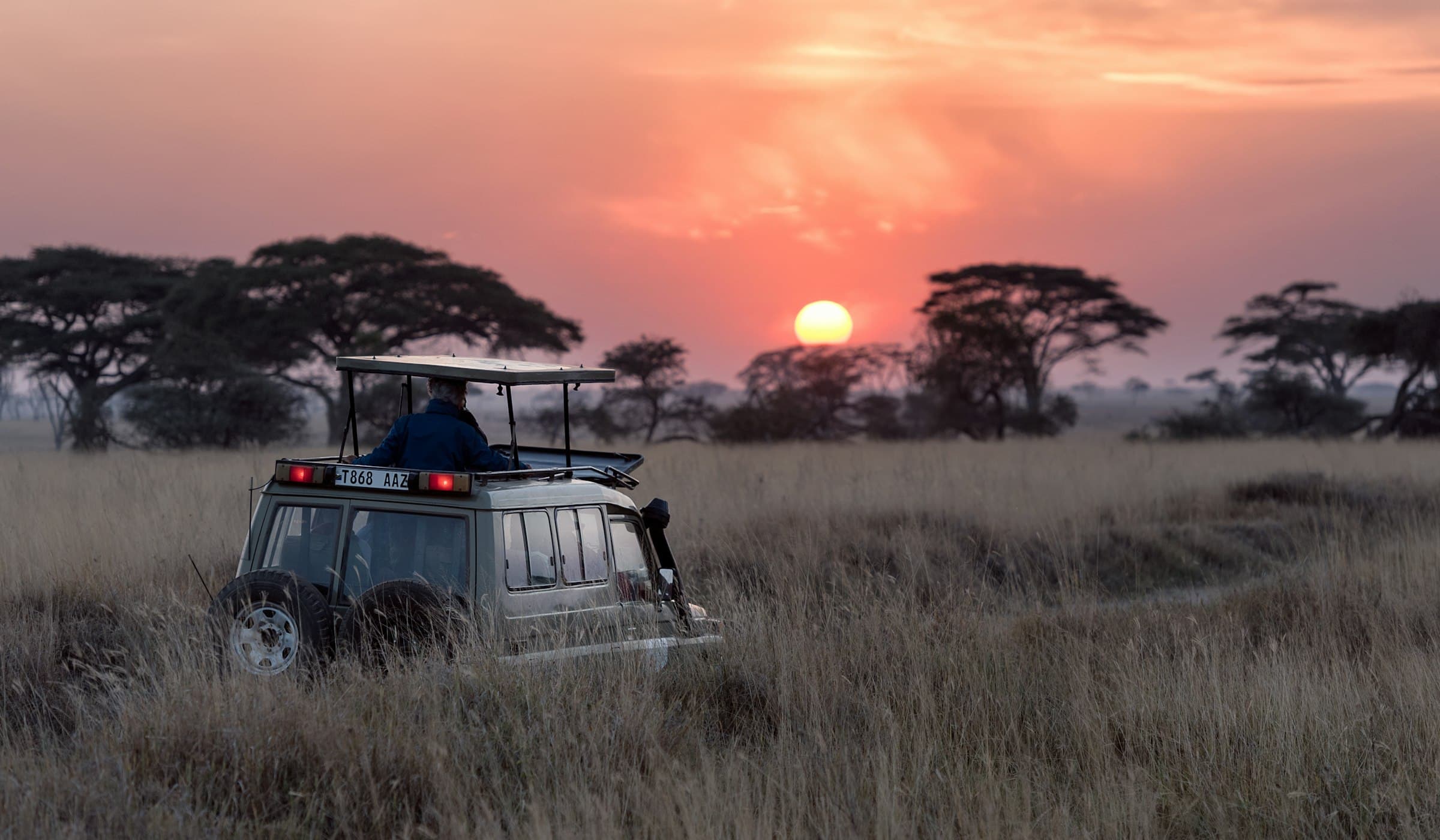
A safari is no longer one thing. It can be a week in a tented camp, a morning in a canoe, a long walk behind a Zambian tracker, or an hour sitting still while a gorilla family decides what to make of you. The best trip is the one that matches the traveller.
A walking safari in South Luangwa
South Luangwa is where the walking safari was invented, and Zambians are still the best at it. You move slowly — six kilometres, maybe eight — with an armed scout ahead and a tracker reading the dust. You will not see as much as you would from a Land Cruiser. You will see it differently.
For travellers who want to feel small again.
The Great Migration river crossings
Late July through early October, a million-and-a-half wildebeest and several hundred thousand zebra push across the Mara and Grumeti rivers. Crocodiles wait. It is every BBC documentary collapsed into twenty real minutes. Base in a mobile camp and be out by 5:30 a.m.
For first-time safari travellers who want the canonical version.
Gorilla tracking in Volcanoes National Park
Not technically a safari, but nothing will undo you quite like spending an hour at arm's length from a silverback and his family. Permits are expensive ($1,500) and limited (80 per day) by design. Combine with a few days at a lake lodge on Kivu to soften the altitude.
For travellers comfortable spending on a single extraordinary hour.
The Okavango by mokoro
The Okavango Delta is one of the few places on earth that gets wilder in the dry season. From May to September, flood waters arrive from Angola and turn the Kalahari inside out. Explore it from a mokoro — a poled canoe — gliding past hippo pods and painted reed frogs.
For honeymooners and anyone who dislikes early mornings.
Desert-adapted wildlife in Damaraland
Giraffe, elephant, and black rhino that have learned to survive on red rock, fog drip and sparse acacia. Drives are long and the sightings are fewer, but the landscape does most of the work. Stay at Desert Rhino Camp or Mowani and track on foot with Save the Rhino Trust.
For photographers and travellers who already did their first safari.
A self-drive through Kruger
Kruger is the only major safari destination where you can sensibly rent a car, pay the gate fee, and do the whole thing yourself. Book a SANParks rest camp inside the park, get up before the gates open, and you will have the best hour of the day to yourself. Far cheaper than a private lodge, and a completely different rhythm.
For independent travellers and families.
A horseback safari on the Masai Mara conservancies
Zebra do not treat you as a predator on horseback — they treat you as another herd. Cantering alongside giraffe is among the stranger and more euphoric things you can do with an afternoon. Offbeat Riding and Safaris Unlimited both run strong itineraries. Intermediate riding required.
For experienced riders looking for something unforgettable.
Night drives in Ruaha
Ruaha is larger than the Serengeti and gets a tenth of the visitors. It is one of the last places in East Africa where night drives are genuinely productive — leopards, civets, bushbabies, and the massive Ruaha lion prides. Combine with Nyerere (the old Selous) for a contrast of landscapes.
For travellers who have been to Serengeti and want the quieter cousin.
A conservation-focused stay on a private conservancy
Ol Pejeta, Lewa, and Borana are working conservancies where a meaningful share of your bed-night fee funds anti-poaching and community schools. You can also participate — tracking collared lions with researchers, visiting the last two northern white rhinos on earth. The safari is excellent; the context is better.
For travellers who want their trip to do a little work.
A canoe trip on the lower Zambezi
Two or three days paddling downstream in a tandem canoe, camping on islands in the middle of the river. Elephants cross in front of you, fish eagles call from the banks, hippos grumble in the shallows. The adrenaline is real and so is the quiet. Book with a reputable outfit — the canoe guides are the entire experience.
For travellers in good shape who want to earn their sundowner.
Ready to plan yours?